A frying pan, a wok and a Dutch oven answer three different cooking problems, and most kitchens buy them in the wrong order. Diameter, wall thickness and usable capacity decide which one earns a permanent hob position. NEWBULIG lists a 14 inch nonstick skillet at $23.99, a 13.5 inch carbon steel wok at $26.96 and a 6 quart enamel Dutch oven at $36.52, so the price gap is small enough that the specification matters more than the money.
| Pan | Price | Rim diameter | Listed capacity | Body material | Monthly sales |
|---|---|---|---|---|---|
| Nonstick skillet, ASIN B0H1W3Q148 | $23.99 | 14 in | 4.95 quarts | Aluminium, stainless steel base | 586 |
| Carbon steel wok, ASIN B0H3P9P7Y6 | $26.96 | 13.5 in | 1.45 gallons | Carbon steel | 106 |
| Enamel Dutch oven, ASIN B0H2YLPCQB | $36.52 | Not listed | 6 quarts | Enamel cast iron | 1,913 |
Diameter and the usable cooking area
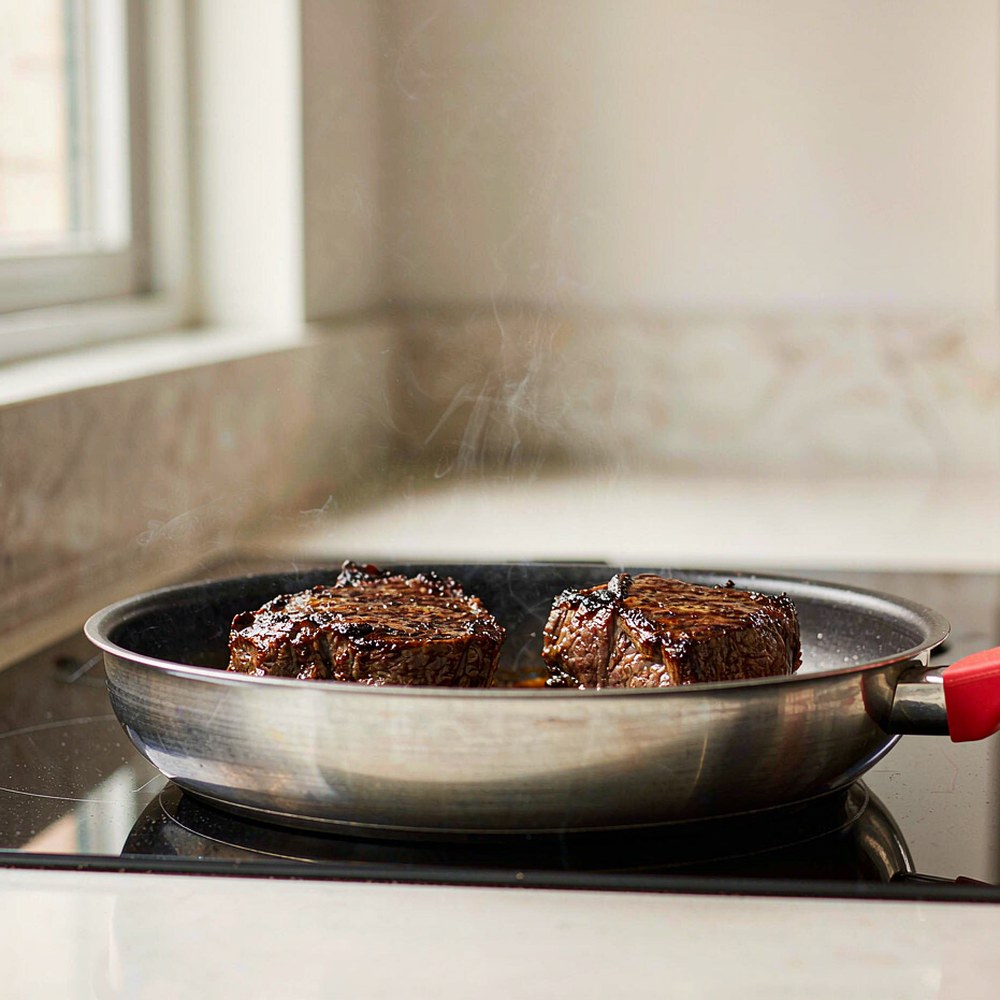
A 14 inch skillet measures 35.6 cm across the rim, which is wide enough to sear two steaks at once without crowding them. Crowding is the error that spoils a sear, because trapped steam cooks the meat instead of browning it.
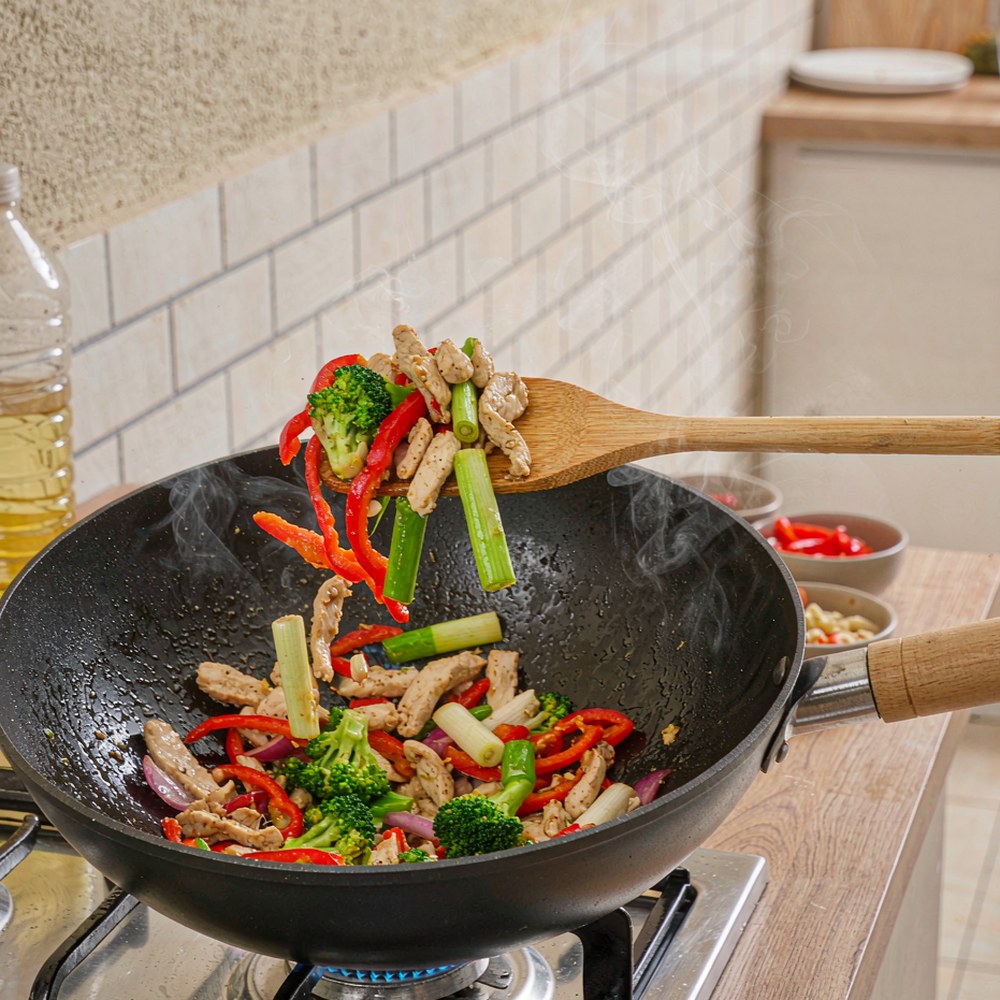
The wok is listed at 13.5 in, or 34.3 cm, so it sounds narrower. Capacity tells a different story, because the curved walls hold far more than a flat pan of similar width.
Contact area matters more than rim width once the heat is on. Only the base meets the burner, and on a flat bottom wok that base is a modest fraction of the 34.3 cm rim.
Neither diameter scales with the number of people eating. A 14 inch pan browns a batch of mince in one go, while the wok takes the same load with room left to toss it.
Capacity in quarts, litres and gallons
Capacity is quoted three different ways across the three listings, so convert before comparing. The skillet holds 4.95 quarts, which is 4.7 litres.
The wok is quoted as 1.45 gallons, equal to 5.8 quarts or 5.5 litres. Dutch oven capacity is listed as 6 quarts, or 5.7 litres.
Working from those figures, the wok holds about a fifth more than the skillet, and the Dutch oven a little more again. Per quart, the wok is the cheapest of the three at roughly $4.65, the skillet sits at $4.85 and the Dutch oven at $6.09.
Volume alone will not settle the choice. A wide shallow pan and a narrow deep pot holding the same volume behave nothing alike on the hob.
Aluminium, carbon steel and enamel compared
Body material governs weight, heat response and how the pan ages over a few years. Aluminium spreads heat quickly and answers a dial change within seconds.
Carbon steel behaves in a similar way but starts thinner, then seasons into a dark patina that does most of the release work. Enamel cast iron is the opposite case. It heats slowly, holds heat for a long time and weighs far more than the other two.
That weight is the trade-off. A full 6 quart Dutch oven is a two hand lift, and it cannot be tossed one handed the way a wok can.
Nonstick coating against a seasoned surface
The skillet carries a ceramic nonstick coating over an aluminium body, and its listing describes a stainless steel base for induction, electric and gas hobs. Oven use is claimed as well.
Carbon steel arrives pre-seasoned. That seasoning is not a permanent coating, so it wears with acidic food and rebuilds when the pan is heated with a thin film of oil.
Enamel wants the gentlest handling of the three. Metal utensils chip it, and a chipped rim is not repairable at home.
The skillet’s silicone handle sleeve is not oven safe, so it slides off before the pan goes under a grill. A pan left in a hot oven with the sleeve fitted will mark the grip permanently.
Ratings, reviews and monthly sales
The skillet carries 4.4 from 17 reviews, the wok 4.0 from 116, and the Dutch oven 4.2 from 18. All three sit close enough that review count matters more than the average.
Monthly sales separate them more sharply. NEWBULIG reports 1,913 for the Dutch oven, 586 for the skillet and 106 for the wok, which suggests buyers arrive looking for braising rather than stir frying.
A thin review count is not a fault in the pan. It caps confidence, so a 4.4 built on 17 reviews carries less weight than a 4.0 built on 116.
What none of the three can do
The wok is the wrong tool for a flat omelette, because the curve pools oil at the centre and leaves the outer edges dry. Enamel cast iron is not suitable for a household that wants quick weeknight cooking.
Storage decides more than most buyers expect. A 14 inch skillet with a long handle needs a deep drawer, and an overhead rack is often the only place it fits.
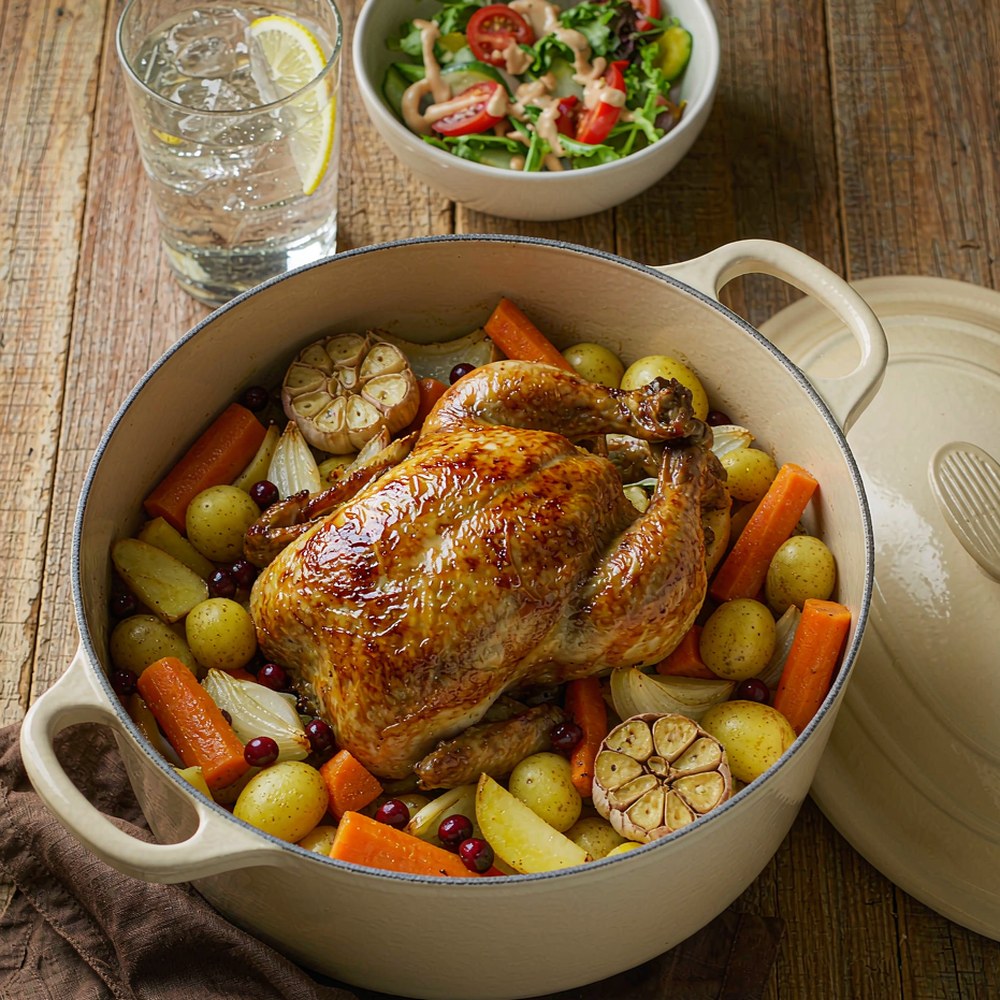
Anyone cooking for one should treat the 6 quart Dutch oven as overkill, since a single portion will not fill the base and the walls take minutes to warm through.
Capacity figures also describe the pan, not the meal. A 4.95 quart skillet filled to the rim will boil over, and the practical working volume is lower than the specification suggests.
Two pans will cover most kitchens. Three only earns its space when braising, stir frying and pan searing all happen in the same week, and the guide to cooker sizes in quarts per person sets out the same arithmetic for slow and pressure cookers.
Anyone weighing a Dutch oven against a slow cooker should read the comparison of slow cookers, pressure cookers and Dutch ovens before spending, because the two appliances overlap far more than the shelf position suggests.
Checklist
- Measure the hob.
- Pick the pan that matches how the household actually cooks, because a wok bought for one stir fry a month will sit unused at the back of a cupboard.
- Check the rim diameter against the drawer.
- Convert the capacity into litres before comparing prices across three listings that use quarts, gallons and quarts again.
- Accept the weight of cast iron.
- Read the review count beside the rating, since a high score from a handful of buyers proves very little on its own.
Every figure above comes from the specification block on the individual product pages. Check the capacity, rim diameter, body material and review count before ordering, then measure the hob and the cupboard the pan will live in. A pan that does not fit its storage will not be used, whatever the rating says.
More buying guides
- Mirror Weight and Wall Fixings: What Holds 20 lb of GlassMirror Weight & Wall Fixings
Mirror weight decides which fixing you need long before size matters. Thirteen models run from 5.1 lb to 20 lb, and only seven publish a weight at all. Read the Included Components line before the drill comes out.
6 min read
- A 10 in Shower Head and a 51 in Faux Tree in One BathroomBathroom Corner Reach
A shower set that reaches 15 in from the wall and a 51 in artificial tree that spreads 27 in from a small pot. Both are decided by reach rather than footprint, and both need two measurements before either goes in the cart.
6 min read
- Baby Gate and Tree Swing: Height, Opening Width and LoadToddler Gate & Garden Swing
A 36 inch baby gate fits openings from 30 to 40.5 in and stands 35.63 in tall, while a 40 inch saucer swing carries 440 lb on ropes that adjust from 33.5 to 63 in. Both need one measurement before the order: the doorway gap for the gate, and a sound branch for the swing.
7 min read
- Desk Chair, Tower Heater and Mini Cooler for a Spare RoomSpare Room Workspace
Three appliances turn a spare room into a place to work: a swivel chair that needs 4.7 sq ft of floor, a 1,500 W tower heater that fills most of a 15 A circuit, and a 4 litre cooler that is not a fridge. Every size and wattage here comes from the product pages.
7 min read
- Clamp-On Forks, Hitch Adapters and Bench Kit: Fit and WeightYard Attachments & Bench Kit
Four tools that all have to fit something already owned: clamp-on pallet forks, a Category 1 hitch adapter, a 330-piece tool case and a 550 W heat press. The listing fields decide each one.
5 min read
- Automatic Pet Feeders and Travel Carriers: Capacity and FitPet Feeding & Travel
Two automatic feeders and two ways to move a pet, compared on the fields that decide the purchase: hopper litres, body weight, footprint and cable run. The numbers favour the larger hopper for two cats and the hard carrier for a small boot.
5 min read