A spare room turns into an office when three things fit inside it: a chair that swivels, a heater that keeps the air workable, and somewhere cold for drinks. Two of them draw from the same socket. One takes nearly five square feet of floor.
Start with the floor, not the desk
Floor space comes before style. A 26 inch square footprint reads as small on a spec sheet, right up to the moment the base plate and the swivel arc are marked out on the carpet.
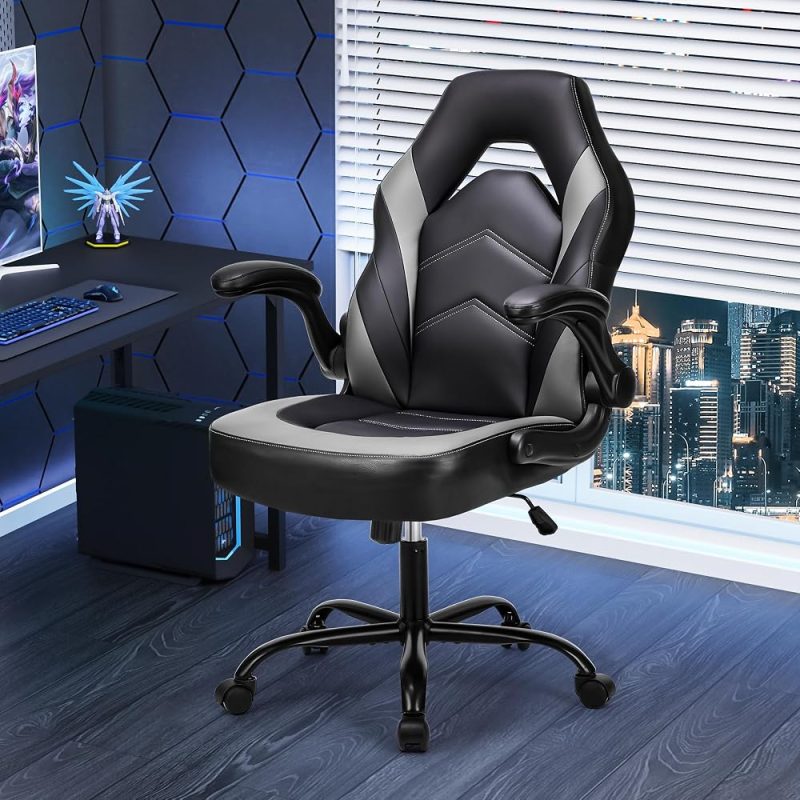
The chair here measures 26 by 26 by 46 inches and weighs 29.3 pounds. Its base covers 676 square inches, close to 4.7 square feet, and that whole area has to stay clear if the castors are to turn.
Height sets a second constraint. At 46 inches the backrest stands taller than the desk it serves, so an over-desk shelf or a low window frame becomes the part that has to move.
Storage is the other half of the same calculation. A printer, a box file and a bag of cables all compete for the same corner, and the rolling cart and utility cart guide covers the wheeled options that keep a heavy load off the desk.
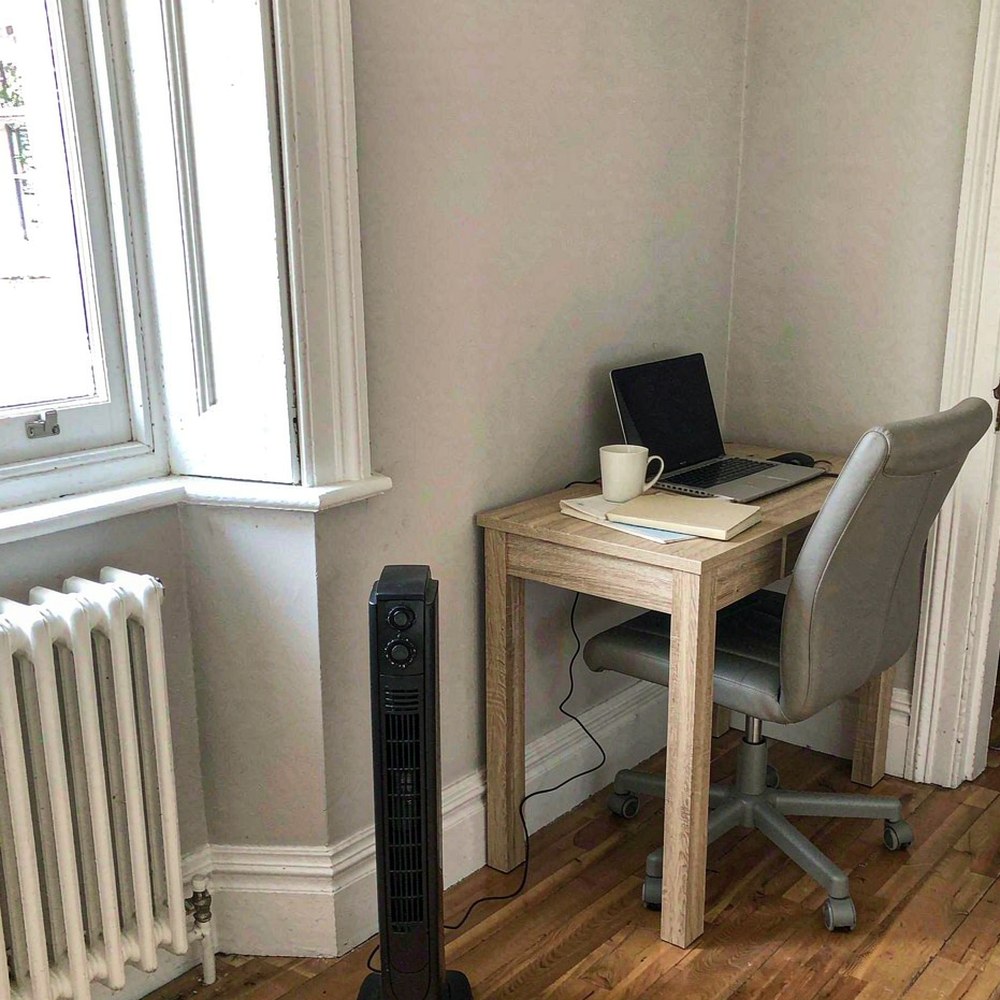
A 26 inch square that has to swivel
Four castors need more room than the base itself. A chair pushed under a desk still swings its arms through a wider circle, and a filing cabinet within 12 inches of the seat will be struck on every turn.
Faux leather over a sponge fill is the cheap, wipeable option, and it is not a breathable one. Two hours of sitting in a warm room turns the seat sticky, which matters more in July than in November.
Flip-up armrests are the useful detail here. Folded up, the chair slides under a desk with a shallow kneehole; folded down, the arms set the width at something closer to 30 inches across.
The rating deserves a caveat. At $62.95 this chair shows 4.6 stars from 310 reviews and moves 64 units a month, which is a reasonable base. The 5 star average on the tower heater comes from 3 reviews, and three opinions is not evidence of anything.
What 1,500 watts asks of one socket
A 1,500 W heater is the largest appliance most people plug into a ring main without thinking. At 120 V it pulls 12.5 A, and a standard 15 A branch circuit is rated for 1,800 W in total, derated to about 1,440 W for a load held for hours.
That margin is thin. A kettle, a monitor and a laptop charger on the same circuit can push a 1,500 W heater past the limit, and the breaker will do its job at the least convenient moment. Move the heater to a socket on another circuit before adding anything else.
Extension leads are where this goes wrong. A 13 A reel rated for 1,000 W is not suitable for a 1,500 W load, and a coiled lead has nowhere to put the heat that builds inside it. A walking pad under the same desk adds a second motor to that sum, and the walking pad guide sets out the footprint it needs.
Heat output is not the same as room size
Nothing on the listing states a room size, and that omission is common. Wattage tells you how fast heat enters a room; it says nothing about how fast the room loses it again through single glazing, an open chimney or a door that never quite closes.
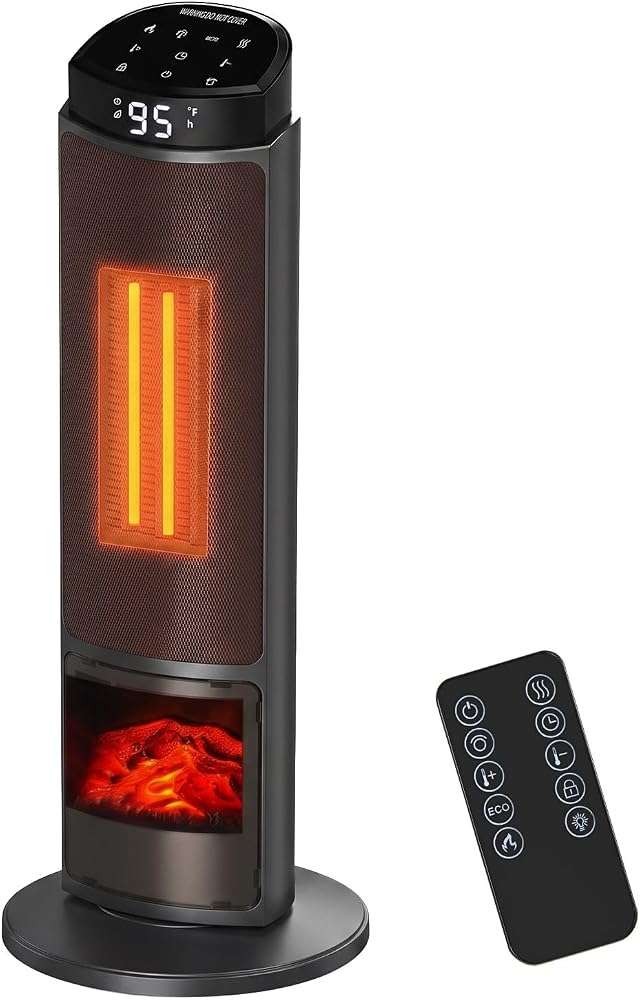
Four point one pounds and 23.62 inches of height make this a tower unit that stands on the floor rather than a box that sits on a desk. Oscillation spreads the warm air across a wider arc, and the timer stops it running after the room is empty.
An honest limit sits behind the thermostat. Its top setting is 95 °F, which is 35 °C, so the unit cannot heat a room to summer temperatures in January. It takes the edge off a cold morning instead.
Child lock and overheat protection are worth more than they sound in a room used by children. Neither replaces a fixed guard around a hot element, and neither makes the unit safe to leave running in a room with a pet that chews cables.
Four litres is a shelf, not a larder
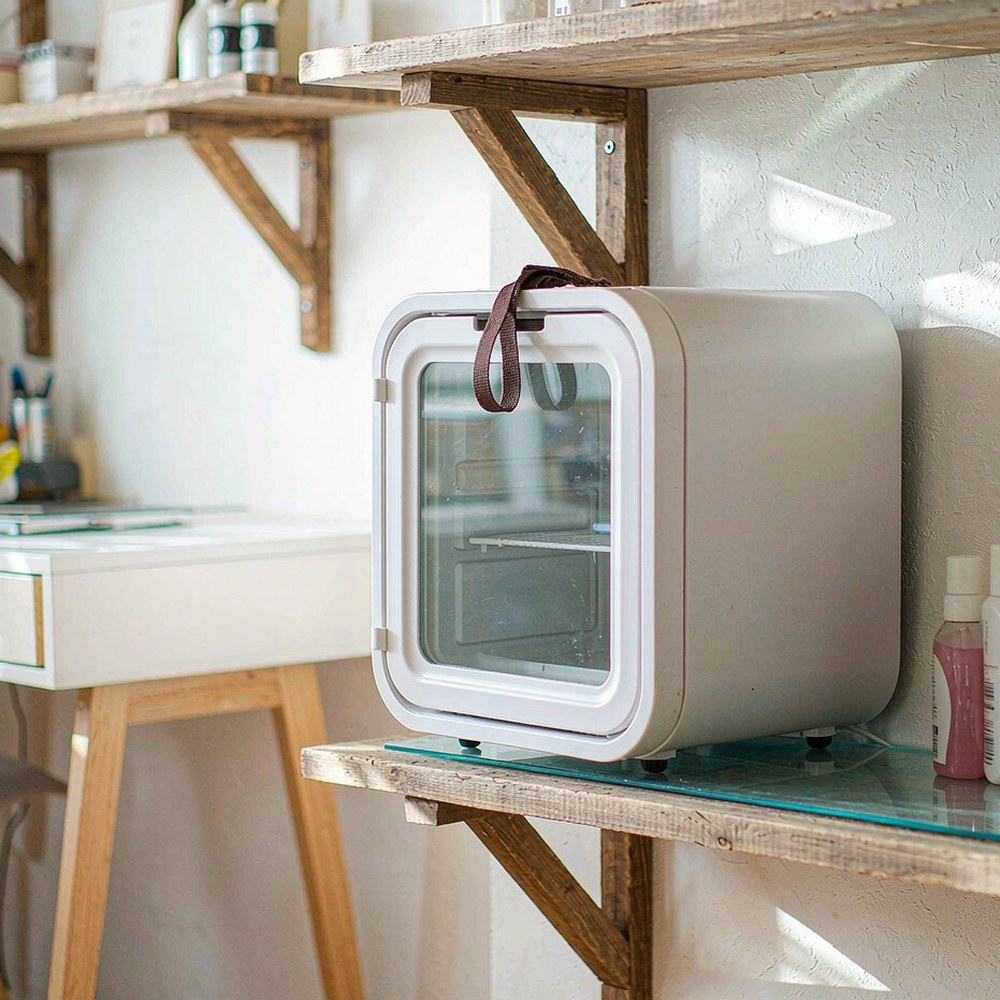
Capacity is where expectations drift furthest. Four litres is 4.23 quarts, roughly six 500 ml bottles with room to spare, and the cabinet has one shelf to divide it.
This is a thermoelectric cooler, not a compressor fridge. The 12 V DC input gives that away, and the listing publishes no figure for how far below room temperature it holds. Cool is not the same as cold, and a unit sold for skincare is aimed at a different job than one sold for milk.
Treat it as a desk-side cooler. Cans, fruit, chocolate and cosmetics belong inside. For raw meat, opened dairy or anything that has to stay below 4 °C it is the wrong tool, because nothing in the specification claims it can hold that line.
At $26.90 with 4.1 stars from 312 reviews and 74 units a month, it is the cheapest and the most reviewed item in this group. The AC and DC cords both ship in the box, so the same unit works from a car socket on the way to a caravan.
Noise, heat and the hours you keep
Two machines in one small room make two sounds. A fan heater at full output is audible across a quiet room, and a thermoelectric cooler runs a small fan almost constantly, because its element works by moving heat rather than storing cold.
Neither is loud enough to stop a call. Both are loud enough to be noticed on a recording, which is the practical test for anyone working from a spare room with a microphone open all day.
Placement solves most of it. A heater pointed at the chair rather than at the wall warms a person instead of plaster, and a cooler on a shelf behind the desk puts its fan noise behind the microphone rather than in front of it.
Three numbers to write down before you buy
| Product | Key specification | Weight | Price | Units / month | Rating |
|---|---|---|---|---|---|
| Tower fan heater, 23 inch | 1,500 W, 95 °F maximum | 4.1 lb | $42.99 | 102 | 4.6 (3 reviews) |
| Swivel desk chair | 26 x 26 x 46 in | 29.3 lb | $62.95 | 64 | 4.6 (310 reviews) |
| Mini cooler, 4 litre | 4 L, one shelf, 12 V | 3.5 lb | $26.90 | 74 | 4.1 (312 reviews) |
All three together cost $132.84 and weigh 36.9 pounds. The chair accounts for four fifths of that weight and half the money, which is the right way round: it is the only one of the three that a person sits on for eight hours.
Sales volume runs the other way. The heater moves 102 units a month against 64 chairs, so the cheapest way to warm a room outsells the most expensive way to sit in it. Weight and price rarely track volume.
A 4 litre cooler and a 1,500 W heater ask different questions of the same room. One wants shelf space near a socket, the other wants floor space near a chair, and both want a circuit that is not already loaded.
Checklist
- Mark the chair’s 26 inch base on the floor, then add the swing of the arms.
- Read the wattage before the price, because 1,500 W uses most of a 15 A circuit on its own and leaves little for anything else.
- Check the thermostat ceiling.
- Confirm the cooler holds 4 litres and one shelf, then decide whether that is enough for a working day.
- Treat any star average with fewer than 20 reviews as a placeholder, and look at the count before the score.
- Put the heater on a socket that shares nothing with the kettle, and keep the lead uncoiled.
Every figure above comes from a specification field on a product page, where dimensions, weight, wattage, capacity, price and rating sit together. Read those fields before ordering, and treat any room-size claim in a listing as marketing until a wattage figure backs it up.
More buying guides
- Mirror Weight and Wall Fixings: What Holds 20 lb of GlassMirror Weight & Wall Fixings
Mirror weight decides which fixing you need long before size matters. Thirteen models run from 5.1 lb to 20 lb, and only seven publish a weight at all. Read the Included Components line before the drill comes out.
6 min read
- A 10 in Shower Head and a 51 in Faux Tree in One BathroomBathroom Corner Reach
A shower set that reaches 15 in from the wall and a 51 in artificial tree that spreads 27 in from a small pot. Both are decided by reach rather than footprint, and both need two measurements before either goes in the cart.
6 min read
- Baby Gate and Tree Swing: Height, Opening Width and LoadToddler Gate & Garden Swing
A 36 inch baby gate fits openings from 30 to 40.5 in and stands 35.63 in tall, while a 40 inch saucer swing carries 440 lb on ropes that adjust from 33.5 to 63 in. Both need one measurement before the order: the doorway gap for the gate, and a sound branch for the swing.
7 min read
- Clamp-On Forks, Hitch Adapters and Bench Kit: Fit and WeightYard Attachments & Bench Kit
Four tools that all have to fit something already owned: clamp-on pallet forks, a Category 1 hitch adapter, a 330-piece tool case and a 550 W heat press. The listing fields decide each one.
5 min read
- Automatic Pet Feeders and Travel Carriers: Capacity and FitPet Feeding & Travel
Two automatic feeders and two ways to move a pet, compared on the fields that decide the purchase: hopper litres, body weight, footprint and cable run. The numbers favour the larger hopper for two cats and the hard carrier for a small boot.
5 min read
- Patio Cover, Umbrella and Heater: Closing the GardenPatio Care & Heating
Three items close a patio for autumn: a 108 inch waterproof cover, a ten foot cantilever umbrella on a 17 kg base, and a 48,000 BTU propane heater. What each one measures, costs and cannot do.
6 min read