A portable carpet cleaner and a canister vacuum both work on floors, yet they remove different things. One pushes solution into fabric and pulls it back out with the soil. The other lifts dry grit and pet hair with air alone. NEWBULIG lists a carpet shampooer at $45.48 and a bagless canister vacuum at $51.59, so the choice rests on what is actually on the floor.
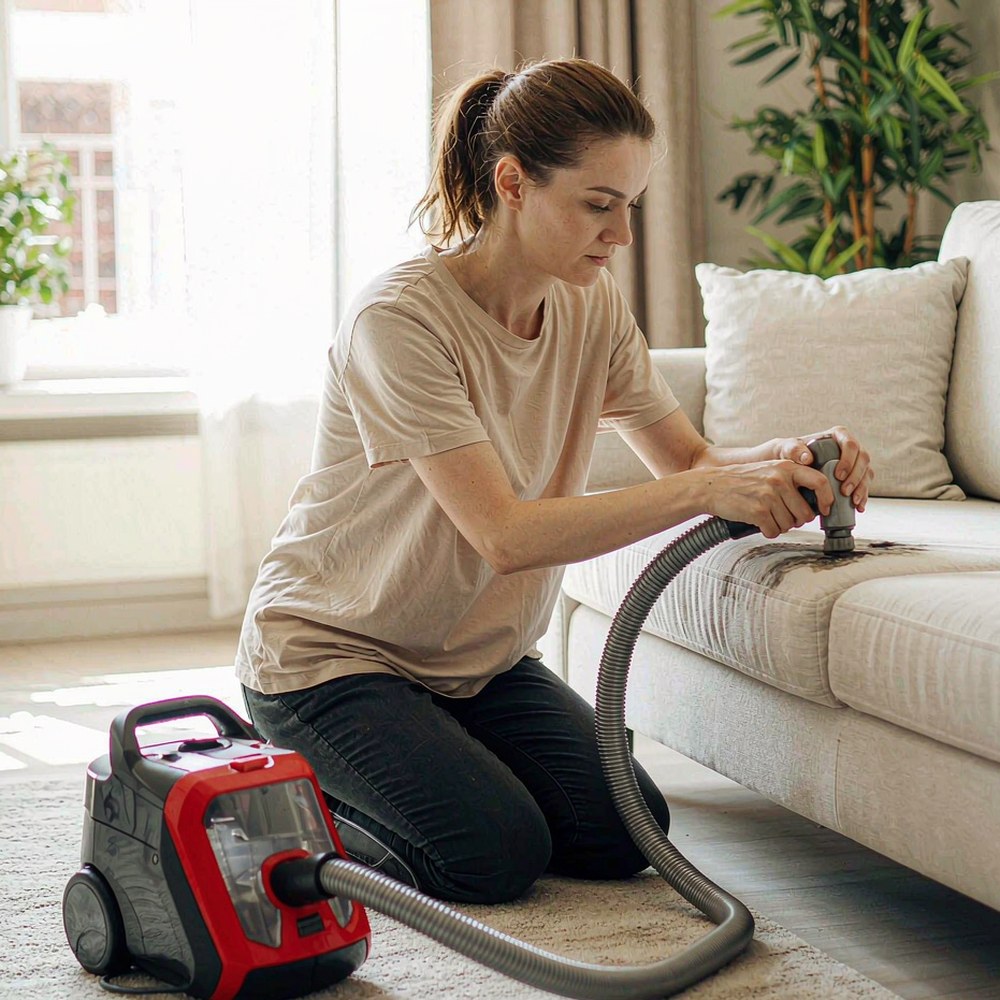
Two machines, two different jobs
The shampooer works with liquid. Solution leaves a tank, passes through a brush head, then returns carrying the soil it lifted out of the fibres.
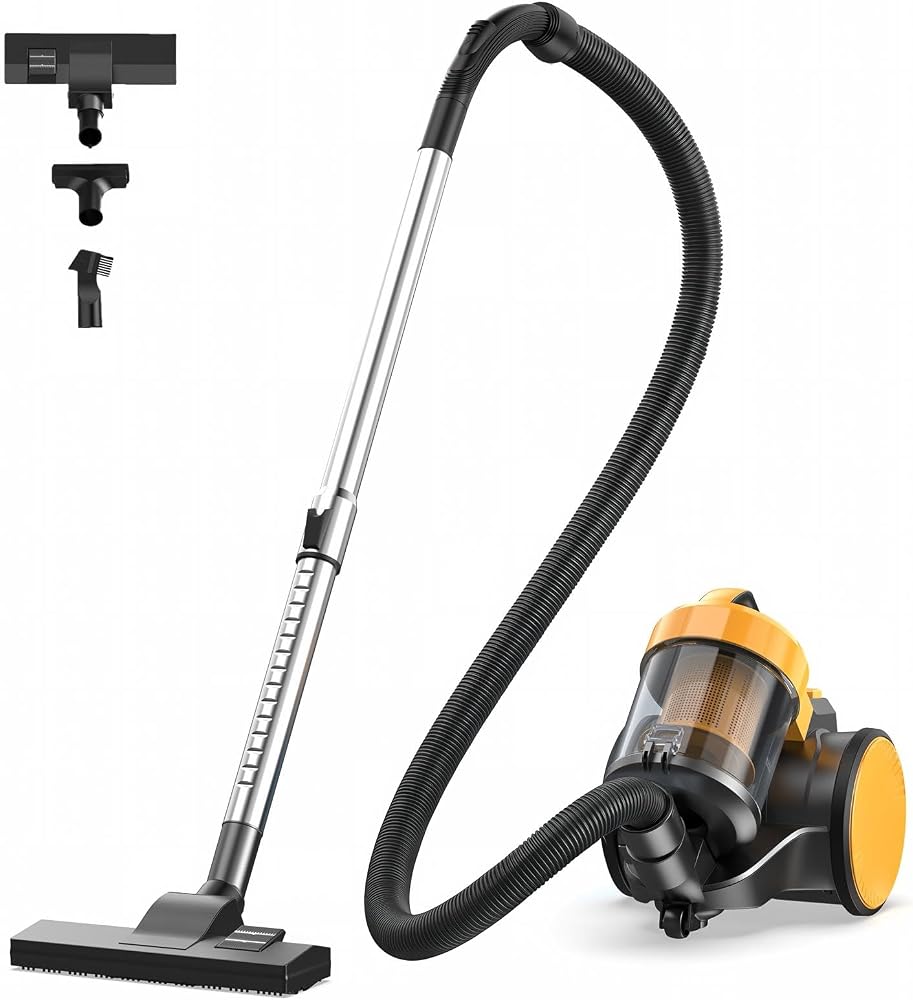
The vacuum works with air. A motor pulls a stream of air through a dust cup, and a HEPA filter traps fine particles before the air leaves the body.
Neither method replaces the other. Buying one will not fix a job the other was built for, and a home with carpet, rugs and hard floor usually ends up wanting both tools.
Capacity sets how long one pass lasts
The shampooer carries 1.05 litres of clean solution, so a large three-seat sofa can drain a full tank before the job ends.
The vacuum holds 1.8 litres of dry debris, roughly 70 per cent more volume inside a body of almost the same size.
A wet machine empties faster than that figure suggests, because dirty water takes up room as it works. Plan on emptying the tank between rooms rather than in the middle of one.
A larger cup buys cleaning time, not suction. The head still has to reach the fibre before any cup fills.
Wattage is not the same as suction
The canister vacuum draws 850 W from a 120 V supply, and the listing names a washable HEPA filter instead of a paper bag.
The shampooer states mains power on its page but publishes no wattage figure at all, which makes a side-by-side power comparison impossible.
A wattage number describes what the motor consumes. It says nothing about how much air the head moves at the floor.
Suction also depends on the seal between the head and the surface. A worn brush strip on a carpet lets air slip past, whatever the motor draws.
Weight decides who carries it upstairs
At 7.3 lb the shampooer is the lighter unit. The vacuum adds another 1.5 lb, and both have to be carried over a stair carpet between rooms.
The shampooer measures 13.39 in deep, 9.45 in wide and 10.63 in high, a box that fits a low shelf without a struggle.
Its partner runs 13.15 in long, 9.45 in wide and 11.73 in high, so the two bodies claim almost the same shelf width.
A full tank adds to the figure on the label. Anyone with a shoulder problem should lift both in a shop before ordering.
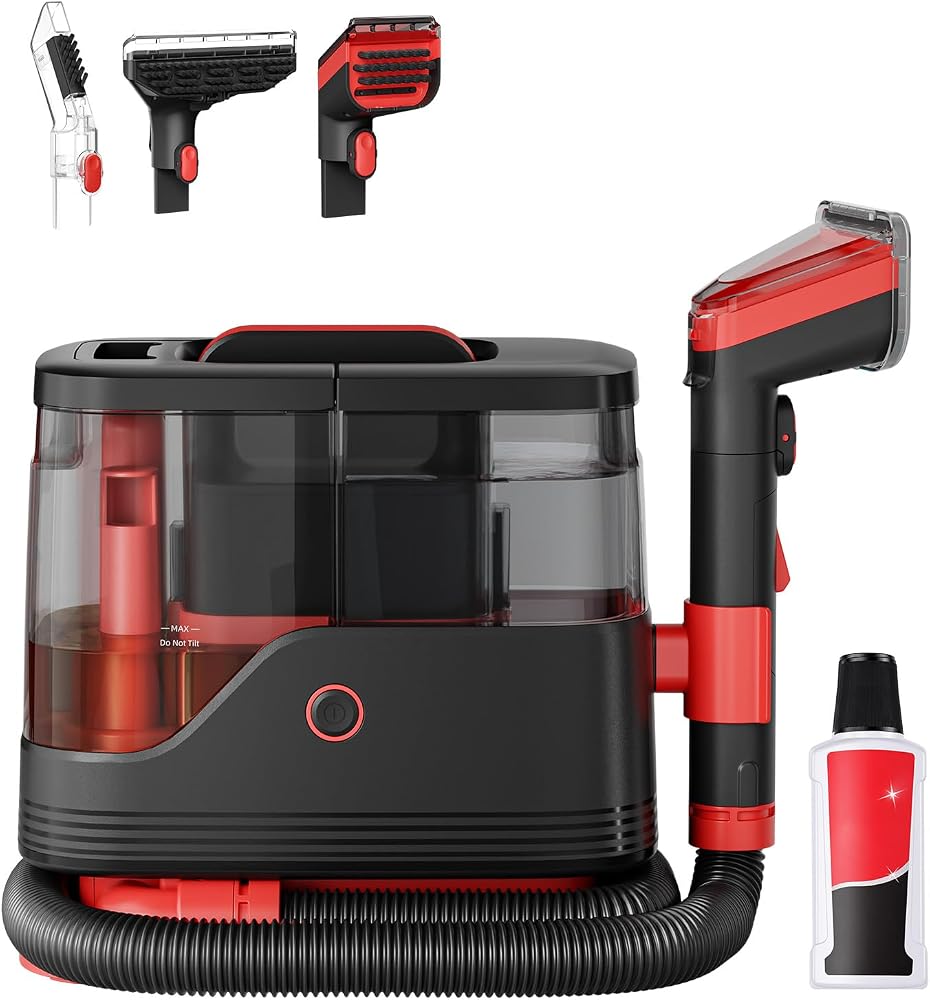
How the two listings compare
| Model | Price | Weight | Capacity | Power | Rating | Monthly sales |
|---|---|---|---|---|---|---|
| Portable carpet shampooer, ASIN B0H8NV3D3N | $45.48 | 7.3 lb | 1.05 litres | Mains | 4.4 from 23 ratings | 1928 |
| Bagless canister vacuum, ASIN B0H1WN6Q78 | $51.59 | 8.8 lb | 1.8 litres | 850 W | 4.3 from 17 ratings | 118 |
The price gap is $6.11, about 13 per cent, and the dearer machine is buying a motor rather than a bigger tank.
Ratings sit close together at 4.4 and 4.3 from 23 and 17 ratings. Both samples are thin, and a thin sample proves very little about long-term reliability.
Monthly sales separate them sharply at 1928 against 118, which points to the shampooer as the safer first purchase for most homes.
Both listings ship a single unit with the tools shown, so nothing extra has to be ordered before the first job starts.
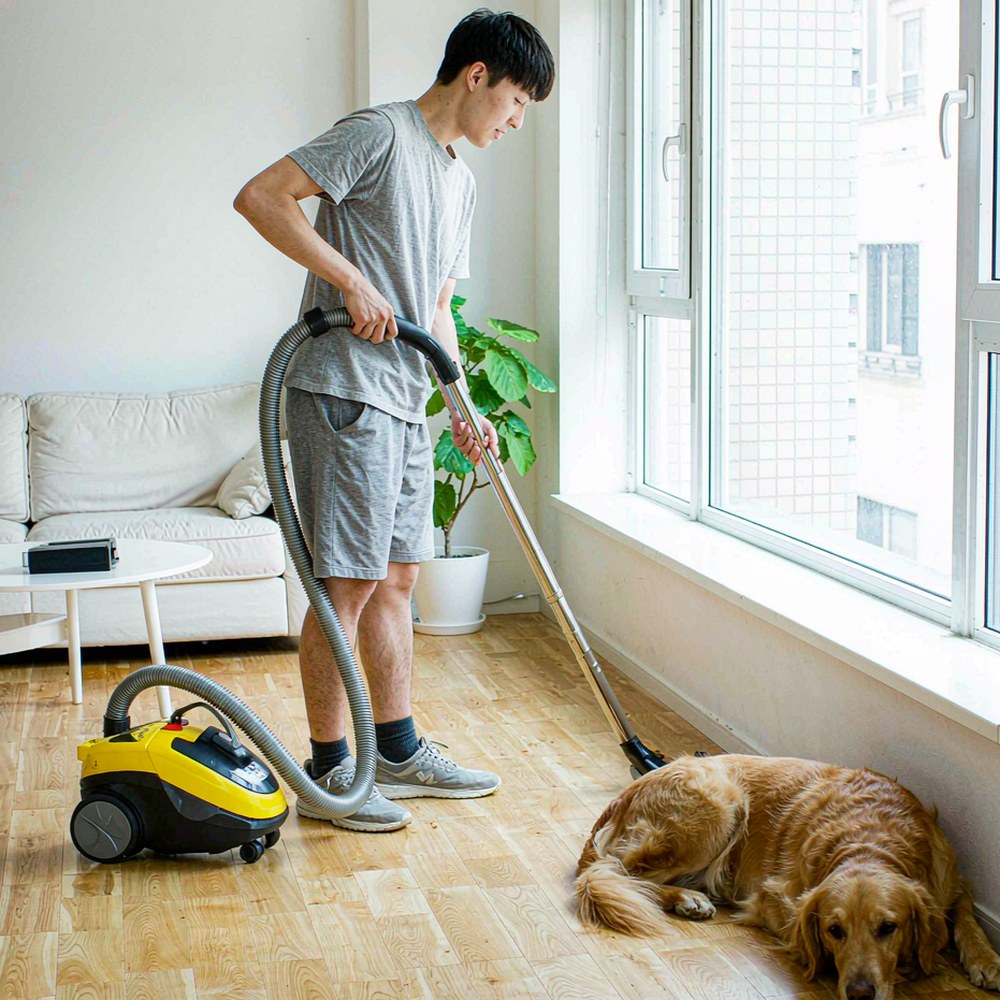
Stains, pet hair and drying time
Stains respond to the shampooer. Solution loosens the dried soil, and the brush head lifts it back into the tank instead of spreading it.
Pet hair responds to the vacuum. A crevice tool and a multi-surface head reach under a sofa where loose hair collects in a line.
Drying is the hidden cost of the wet method. A damp carpet takes hours to dry, and a room with poor airflow takes longer still.
Keep a window open or a fan running while the fabric dries, and keep feet off the patch until it feels dry to the touch.
Dry soil needs far less recovery time, which is why the vacuum suits a weekday evening and the shampooer suits a weekend morning.
What each tool will not do
A shampooer cannot clean a wool rug that bleeds colour, and it will not dry the carpet it wets.
A vacuum will not lift a set stain from upholstery, because dried soil needs a liquid to release it from the fibre.
Neither unit suits a home with no socket near the room, since both run on a cable rather than a battery.
Skip the shampooer on solid wood, because standing water damages the finish and can lift a joint at the edge of a board.
Skip the vacuum on thick shag pile, where a canister head can stall and the hose demands more pull than the job deserves.
Checklist
- Name the soil first.
- Choose liquid for set stains, dry air for grit and pet hair, or both if the home has carpet and hard floor side by side.
- Measure the cupboard shelf, because the two bodies differ by less than an inch on depth.
- Find a socket.
- Weigh the machine with a full tank before committing to a weekly routine at the top of a staircase.
- Read the rating counts rather than the star average.
Every figure comes from the specification tables on the two product pages, so check them before ordering. Weight and tank size sort these two machines apart faster than any feature list, and the steam mop guide answers the same floor question for a home that already owns a wet tool. Anyone comparing capacities across the catalogue should read the laundry hamper guide for how litres translate into real working volume.
More buying guides
- Mirror Weight and Wall Fixings: What Holds 20 lb of GlassMirror Weight & Wall Fixings
Mirror weight decides which fixing you need long before size matters. Thirteen models run from 5.1 lb to 20 lb, and only seven publish a weight at all. Read the Included Components line before the drill comes out.
6 min read
- A 10 in Shower Head and a 51 in Faux Tree in One BathroomBathroom Corner Reach
A shower set that reaches 15 in from the wall and a 51 in artificial tree that spreads 27 in from a small pot. Both are decided by reach rather than footprint, and both need two measurements before either goes in the cart.
6 min read
- Baby Gate and Tree Swing: Height, Opening Width and LoadToddler Gate & Garden Swing
A 36 inch baby gate fits openings from 30 to 40.5 in and stands 35.63 in tall, while a 40 inch saucer swing carries 440 lb on ropes that adjust from 33.5 to 63 in. Both need one measurement before the order: the doorway gap for the gate, and a sound branch for the swing.
7 min read
- Desk Chair, Tower Heater and Mini Cooler for a Spare RoomSpare Room Workspace
Three appliances turn a spare room into a place to work: a swivel chair that needs 4.7 sq ft of floor, a 1,500 W tower heater that fills most of a 15 A circuit, and a 4 litre cooler that is not a fridge. Every size and wattage here comes from the product pages.
7 min read
- Clamp-On Forks, Hitch Adapters and Bench Kit: Fit and WeightYard Attachments & Bench Kit
Four tools that all have to fit something already owned: clamp-on pallet forks, a Category 1 hitch adapter, a 330-piece tool case and a 550 W heat press. The listing fields decide each one.
5 min read
- Automatic Pet Feeders and Travel Carriers: Capacity and FitPet Feeding & Travel
Two automatic feeders and two ways to move a pet, compared on the fields that decide the purchase: hopper litres, body weight, footprint and cable run. The numbers favour the larger hopper for two cats and the hard carrier for a small boot.
5 min read